



Fc Receptor (FcR)
Fc Receptor
Fc Receptors (FcR) are a class of cell surface receptors that can recognize and bind to the Fc region of immunoglobulins, playing an important role in processes such as the immune response and immune regulation. According to the types of immunoglobulins they recognize, FcR can be classified into FcγR, FcεR, FcαR, etc. According to their functional characteristics, they can be divided into activating FcR and inhibitory FcR. FcR mediate the phagocytosis of immune cells, prompting phagocytes to eliminate antigenic foreign substances such as pathogens. FcR also participate in ADCC, which activates NK cells and other cells to kill target cells, affecting the immune response. In addition, FcR can clear immune complexes and prevent them from depositing in tissues and triggering inflammation. Abnormal functions or dysregulated expressions of FcR can lead to autoimmune diseases and allergic diseases. In tumors, FcR are involved in both the immune escape of tumor cells and can serve as targets for immunotherapy[1][2].
All Product Categories
-
Fc Receptor (FcR) Verwandte Produkte (73)
Verwandte Produkte (73)

-
Nipocalimab
 0 ImagesSynonyms: M281Nipocalimab (M281) is a fully humanized, recombinant, and non-glycosylated IgG1 monoclonal antibody. Nipocalimab can bind to the IgG-binding site of FcRn with high affinity and inhibit the transplacental transfer of IgG. Nipocalimab can be used in the research of fetal and neonatal hemolytic disease, myasthenia gravis, and various IgG-mediated autoimmune diseases.
-
Efgartigimod alfa
 0 ImagesSynonyms: ARGX-113Efgartigimod alfa (ARGX-113) is a reversibility, humanized Fc receptor antagonist . Efgartigimod alfa is a anti FcRn monoclonal immunoglobulin G (IgG1) Fc fragment. Efgartigimod reduces serum levels of total IgG, including pathogenic autoantibodies, by blocking FcRn function without permanent impairment. Efgartigimod alfa can be used for generalised myasthenia gravis (gMG) and primary immune thrombocytopenia research.
-
Batoclimab
 0 ImagesSynonyms: RVT-1401; HBM9161; IMVT-1401Batoclimab (RVT-1401) is a fully humanized IgG1 monoclonal antibody targeting FcRn. Batoclimab has high affinity for the IgG-binding site on FcRn. By competitively binding to the IgG binding site on FcRn, Batoclimab blocks FcRn-mediated recycling of IgG, resulting in enhanced degradation and subsequent reductions in IgG levels. Batoclimab can be used in the research of autoimmune diseases such as myasthenia gravis and thyroid eye disease.
-
Cusatuzumab
 0 ImagesSynonyms: ARGX-110Cusatuzumab (ARGX-110) is a selective competitive blocker targeting CD70 (with an equilibrium dissociation constant of 17 pM for binding to human CD70). Cusatuzumab also possesses enhanced antibody-dependent cell-mediated cytotoxicity (ADCC) activity. It is a humanized IgG1 monoclonal antibody, artificially synthesized through humanization and genetic engineering modifications (CH2 region mutation to enhance effector function). Cusatuzumab has a dual mechanism of action: firstly, it competitively blocks the interaction between CD70 and CD27, inhibiting the CD27-NF-κB signaling pathway, reducing regulatory T cell (Treg) activation and tumor cell proliferation; secondly, by enhancing binding to FcγRIIIa, it mediates ADCC and antibody-dependent cellular phagocytosis (ADCP), directly lysing CD70-positive tumor cells. Cusatuzumab can efficiently eliminate leukemia stem cells (LSCs), induce tumor cell differentiation and apoptosis, restore immune surveillance, and target CD70-positive tumors. Cusatuzumab is used in the study of acute myeloid leukemia (AML).
-
Riliprubart
 0 ImagesSynonyms: SAR445088Riliprubart (SAR445088) is a selective anti-C1s humanized IgG4 monoclonal antibody with mutations that enhance its binding to the neonatal Fc receptor. Riliprubart blocks activation of the classical complement pathway, prevents the formation of the C3 convertase C4b2a, and inhibits complement-mediated hemolytic activity. Riliprubart can be used in research related to classical complement-mediated diseases, cold agglutinin disease, and chronic inflammatory demyelinating polyneuropathy. For the isotype control of Riliprubart, refer to Human IgG4 (S228P) kappa, Isotype Control (HY-P99003).
-
Quilizumab
 0 ImagesSynonyms: Anti-Human IGHE Recombinant Antibody; 47H4; MEMP1972AQuilizumab (Anti-Human IGHE Recombinant Antibody; 47H4; MEMP1972A) is a monoclonal antibody that targets FcγRIIIa and the M1 prime segment of human membrane-bound IgE. Quilizumab has enhanced FcγRIIIa binding affinity and activity against IgE class-switched B cells, and reduces serum IgE levels by inducing antibody-dependent cell-mediated cytotoxicity and apoptosis through cross-linking of membrane-bound IgE receptors. Quilizumab depletes IgE-producing cells; it also directly binds the membrane-bound M1 prime domain on IgE class-switched cells to inhibit IgE production. Quilizumab is used in research on allergic asthma and allergic diseases (asthma, allergic rhinitis).
-
Isobavachin
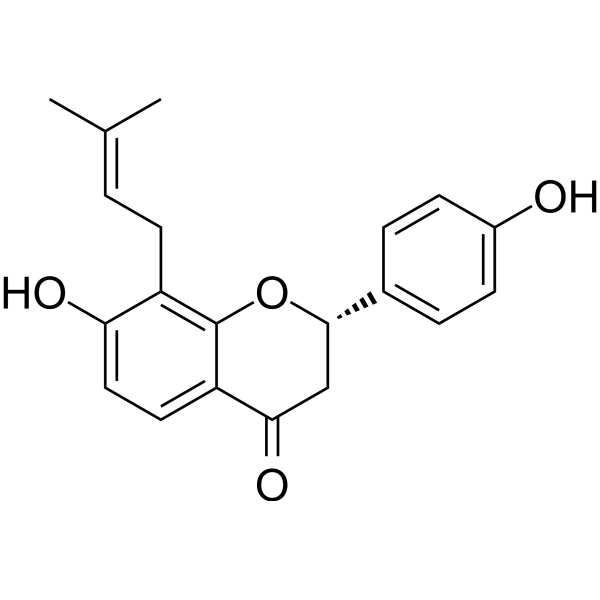 0 ImagesIsobavachin is an orally active, blood-brain barrier-penetrating prenylated flavonoid present in Psoralea corylifolia. Isobavachin inhibits human CYP2B6, CYP2C9, CYP2C19, UGT1A1, UGT1A9, and UGT2B7. Isobavachin suppresses MAPK activation, NF-κB nuclear translocation, overexpression of iNOS/COX-2, FcεRI-mediated signaling pathways, and RANKL-induced osteoclastogenesis. Isobavachin induces autophagy, cytotoxicity, neuronal differentiation, and NRF2 activation; it alleviates oxidative damage, inflammatory responses, apoptosis, iron accumulation, mitochondrial biogenesis, and mast cell degranulation. Isobavachin is applicable to research related to liver injury, inflammatory diseases, osteoporosis, liver cancer, prostate cancer, glioma, periodontitis-induced bone loss, and Alzheimer's disease.
-
Anti-Mouse CD16/CD32 Antibody (2.4G2)
 0 ImagesArt. -Nr.: HY-P99125Anti-Mouse CD16/CD32 Antibody (2.4G2) is an anti-mouse CD16/CD32 IgG2b monoclonal antibody. Anti-Mouse CD16/CD32 Antibody (2.4G2) can block Fcγ receptor-mediated immune responses. Anti-Mouse CD16/CD32 Antibody (2.4G2) can block the combination of CD16 and FcγRs to reduce the production of foam cells. Anti-Mouse CD16/CD32 Antibody (2.4G2) can be used for researches on atherosclerosis and autoimmune hematological disorders.
-
Ligelizumab
 0 ImagesSynonyms: QGE 031; Anti-IGHE Recombinant AntibodyLigelizumab (QGE 031) is a humanized high-affinity anti-immunoglobulin IgE monoclonal antibody. Ligelizumab selectively inhibits the binding of IgE to the high-affinity receptor FcεRI, while the inhibitory effect on the low-affinity receptor CD23 is weak. Ligelizumab can inhibit the activation of effector cells such as mast cells and Basophil, while reducing the production of IgE by B cells, and restoring the IFN-α production and regulatory T cell (Treg) induction function of plasmacytoid dendritic cells (pDC). Ligelizumab can be used in the study of allergic diseases (such as chronic spontaneous urticaria, allergic asthma).
-
Anti-CD32/FcγRIIA Antibody (IV.3)
 0 ImagesArt. -Nr.: HY-P990863Anti-CD32/FcγRIIA Antibody (IV.3) is a kind of mouse IgG2b chimeric antibody inhibitor, targeting to human CD32/FcγRIIA. Anti-CD32/FcγRIIA Antibody (IV.3) can block Fc receptor IIA. Anti-CD32/FcγRIIA Antibody (IV.3) can be used for the researches of inflammation and infection, such as arthritis and E. coli infection.
-
L18I
 0 ImagesL18I is a Bruton's tyrosine kinase (BTK) PROTAC degrader that targets wild-type and BTKC481, and recruits the cereblon E3 ligase to mediate proteasomal degradation. L18I regulates the BCR, TLR, FcγR and NLRP3 inflammasome signaling pathways, inhibits the phosphorylation of PLCγ-2, ERK1/2 and p38, and reduces the levels of B cell activation markers CD25, CD69 and CD86. L18I downregulates the NF-κB, TNF and TLR signaling pathways, reduces the production of pro-inflammatory cytokines, and decreases immune cell infiltration and immune complex deposition. L18I inhibits the proliferation of BTK-expressing lymphoma cells, induces tumor regression in xenograft models, and exhibits synergistic activity when combined with inhibitors of SYK, PI3K or Lyn. L18I can be used in research related to lupus, diffuse alveolar hemorrhage and B-cell lymphoma.
-
BIIB129
 0 ImagesBIIB129 is a covalent, selective, orally active, and brain-penetrant BTK inhibitor (Kd = 0.63 nM). BIIB129 binds to Cys481 and forms a hydrogen bond with Asn484, blocking BCR and FcγR signaling. BIIB129 inhibits B cell activation and proliferation, FcγR-induced microglial proliferation, FcγR-mediated ROS production in neutrophils, FcγR-induced TNF secretion in monocytes, and B cell-mediated antigen presentation to T cells. BIIB129 can be used for research on multiple sclerosis.
-
VIB-9600
 0 ImagesArt. -Nr.: HY-P990676Reinheit: 99.41%VIB-9600 is a humanized antibody expressed in CHO cells, targeting FcgR2a/CD32a. VIB-9600 has a huIgG1 type heavy chain and huκ type light chain, with a predicted molecular weight (MW) of 150 kDa. The isotype control for VIB-9600 can be referenced as Human IgG1 kappa, Isotype Control (HY-P99001).
-
Human IgG1 (L234A/L235A) lambda2, Isotype Control
 0 ImagesArt. -Nr.: HY-P9S0056Human IgG1 (L234A/L235A) lambda2, Isotype Control, is a human monoclonal antibody that serves as an isotype control for human IgG1λ antibody.
-
BI-1206
 0 ImagesArt. -Nr.: HY-P991225BI-1206 is a recombinant and antagonistic human monoclonal antibody targeting FcγRIIB (CD32B). BI-1206 can block CD20 internalization induced by Rituximab (HY-P9913) itself or combined with others including Ibrutinib (HY-10997), Venetoclax (HY-15531), and CHOP. BI-1206 can enhance or recover the activity of Rituximab or other anti-CD20 monoclonal antibodies. BI-1206 has cytolytic activity against malignant B cells. BI-1206 can be studied for cancer research such as mantle cell lymphoma (MCL).
-
2141-V11
 0 Images2141-V11 is an Fc-engineered agonistic antibody against human CD40 with selectively enhanced binding affinity for human FcγRIIB. 2141-V11 drives CD40 multimerization and agonistic signal transduction, activates dendritic cells, promotes antigen cross-presentation and CD8+ T cell priming, induces tertiary lymphoid structure formation, increases leukocyte infiltration, and mediates local and abscopal anti-tumor effects, systemic immune activation and immune memory. 2141-V11 exhibits extremely low systemic toxicity upon intratumoral or intravesical administration, with no dose-limiting toxicity observed at the tested intratumoral doses, whereas high-dose systemic administration induces thrombocytopenia and elevated transaminases. 2141-V11 can be used in research related to breast cancer, melanoma, BCG-unresponsive non-muscle invasive bladder cancer, and recurrent malignant glioma.
-
CR-8020
 0 ImagesArt. -Nr.: HY-P991054CAS. Nr.: 1422526-93-9CR-8020 is a broadly neutralizing antibody targeting the stem region of influenza A virus hemagglutinin (HA), with IC50 values of 0.06 nM or 3.36 nM. CR-8020 mediates antibody-dependent cellular cytotoxicity by activating Fcγ receptors. CR-8020 blocks viral fusion and entry. CR-8020 protects mice from lethal influenza A virus challenge. CR-8020 can be used in research related to influenza A virus infections (H3N2 and H7N9).
-
Anti-Mouse CD16.2 Antibody (9E9)
 0 ImagesArt. -Nr.: HY-P990291Anti-Mouse CD16.2 Antibody (9E9) is a Armenian hamster-derived IgG type antibody inhibitor, targeting to mouse CD16.2. Anti-Mouse CD16.2 Antibody (9E9) reacts with mouse CD16.2, also known as FcγRIV (Fc receptor, IgG, low affinity IV). Anti-Mouse CD16.2 Antibody (9E9) inhibits cellular CD16.2 expression and signaling and blocks FcγRIV. Anti-Mouse CD16.2 Antibody (9E9) can be used for the researches of cancer, inflammation and immunology, such as CT26 tumor and lung inflammation.



